
6
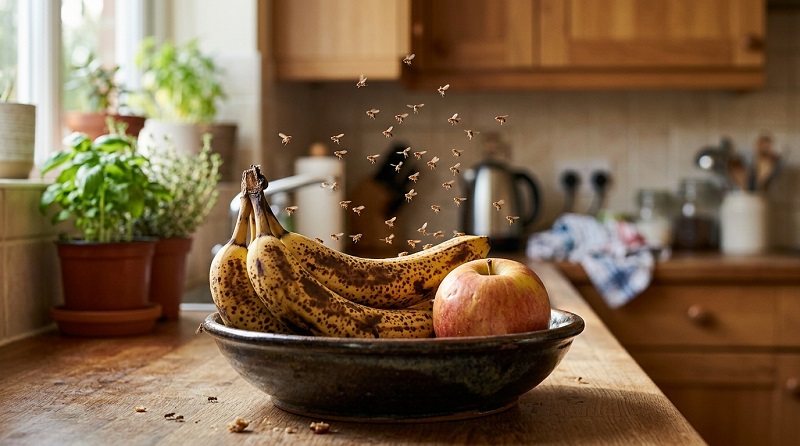
You bring home a vibrant, slightly green cluster of bananas from the grocery store on Tuesday, set them neatly inside your kitchen fruit bowl, and by Thursday afternoon, a persistent cloud of tiny, erratic insects is hovering over the counter. It feels almost supernatural, as if fruit flies spontaneously generate straight out of thin air. In reality, biology is far more calculated. Fruit flies possess an extraordinary olfactory system capable of detecting trace airborne fermentation compounds from considerable distances.
Bananas, with their rapid ripening trajectory and rich sugar content, represent the ultimate culinary beacon for these pests. Once a few find their way onto your counter, they multiply with astonishing speed. Eradicating them requires more than haphazardly swatting the air or tossing a single overripe banana into the trash. To reclaim your kitchen, you must deploy a coordinated strategy that dismantles their lifecycle, neutralizes their food source, and eliminates the hidden breeding havens scattered across your kitchen.
Understanding the Infestation: How Fruit Flies Target Bananas
To permanently rid your space of fruit flies, you have to understand how they arrived in the first place. More often than not, they did not fly through your open doorway as mature adults. The problem usually begins at the grocery store.
Bananas are shipped and displayed in open-air environments where adult fruit flies routinely feed and deposit microscopic eggs on the outer skins. When you purchase the bunch and leave it on your warm kitchen counter, those eggs hatch within twenty-four to thirty hours. The resulting larvae consume the microscopic yeast colonies growing on the peel, pupate, and emerge as fully formed flying adults only a few days later.
Compounding this problem is the natural ripening process of the fruit. As bananas mature, they produce elevated levels of ethylene gas, a plant hormone that converts firm starches into simple sugars. These sugars attract wild airborne yeasts, triggering natural fermentation that produces trace amounts of ethanol and acetic acid. To a female fruit fly, this scent profile signals the ideal nursery for her offspring. She can lay up to five hundred eggs during her brief lifespan, which explains why an unnoticed pair of flies can balloon into a full swarm in less than a week.
Immediate Eradication: Trapping the Existing Swarm
When you already have a noticeable swarm hovering over your counters, your immediate priority is removing the reproductive adults before they can lay another batch of eggs. While chemical aerosol sprays are unsafe near food preparation areas, simple mechanical and homemade solutions deliver exceptional results.
The Heated Apple Cider Vinegar and Dish Soap Method
The most reliable DIY trap relies on fluid dynamics rather than store-bought poisons. Pour roughly an inch of raw, unfiltered apple cider vinegar into a ramekin or small glass bowl, and warm it in the microwave for fifteen seconds to volatilize the aroma. Add three drops of standard liquid dish soap and stir very gently without whipping up a layer of foam.
Apple cider vinegar provides the exact fermented, fruity bouquet that fruit flies find irresistible. The dish soap acts as a surfactant, breaking the liquid’s surface tension. When the flies land to feed on the surface, they immediately sink rather than resting on top of the liquid. Position two or three of these bowls directly next to your fruit bowl and sink basin.
The Precision Paper Funnel Trap
If you are dealing with particularly cautious flies that hover around liquid traps without landing, opt for a physical containment funnel. Place an actual chunk of overripe banana peel into the bottom of a pint glass. Next, roll a sheet of printer paper into a cone with an opening at the tip roughly the size of a pencil eraser, and tape it into place.
Set the funnel inside the glass with the narrow tip pointed down, hovering an inch above the peel, and secure the perimeter with tape so there are no gaps around the rim. Fruit flies have no trouble following the scent downward through the wide opening of the cone, but their erratic upward flight patterns make finding the small hole from the inside virtually impossible.
Mechanical Removal Using a Vacuum
When you need immediate reduction of a dense cloud without waiting for traps to fill, your vacuum cleaner is an underrated weapon. Attach the wand or crevice tool to your vacuum, switch the suction to high, and slowly glide the nozzle through the airspace surrounding your fruit bowl. Because fruit flies have a relatively sluggish launch speed compared to ordinary houseflies, the airflow easily pulls the entire swarm out of the air in seconds.
Treating and Protecting the Bananas Themselves
Clearing the airborne population only solves half the equation. If you leave the fruit untreated, new batches of larvae will continue to emerge. You must change how you handle bananas the moment they enter your household.
Wash Your Bananas Upon Arrival
Most people never think to wash fruit that comes inside an inedible peel, but rinsing bananas is the single most effective preventive habit you can adopt. As soon as you unpack your groceries, bring the entire cluster to the sink and wash the peel thoroughly under lukewarm running water.
Use your hands to gently scrub the stem and the crevices where the individual fingers meet. This quick rinse dislodges unhatched eggs, cleans away sticky sap, and washes away surface wild yeast spores before they can multiply. Dry the bunch completely with a clean kitchen towel afterward, as trapped surface moisture can encourage mold growth.
Wrap the Crown in Plastic Film
The crown—the dense central stem where all the bananas connect—is the primary point of ethylene gas emission and the preferred nesting site for fruit fly eggs. Wrap this cluster tightly with standard plastic cling wrap or aluminum foil. By trapping the release of ethylene at the source, you substantially slow down the ripening rate of the entire bunch while creating an impermeable barrier over the fruit’s most vulnerable real estate.
Utilize the Refrigerator for Ripe Fruit
A common culinary myth claims that bananas must never be placed in the refrigerator. While chilly temperatures will cause the outer peel to turn dark brown or gray due to cold-induced oxidation of cellular pigments, the interior fruit remains firm, sweet, and intact for days. Once your bananas reach your ideal level of sweetness on the counter, move them directly into your refrigerator crisper drawer. The drop in temperature completely halts the fruit fly lifecycle, immobilizes any remaining eggs, and traps fermentation odors inside the sealed appliance.
Eradicating Secondary Kitchen Breeding Havens
A persistent fruit fly problem often lingers even after the bananas have been cleaned or eaten. This happens because the flies readily migrate to other moist micro-environments in the kitchen to lay their eggs.
Clear the Sink Drain and Garbage Disposal
The biological film lining your kitchen sink drain, disposal splash guard, and overflow channel is an ideal nursery for fruit fly larvae. Standard liquid drain cleaners rarely remove the thick organic sludge where these pests thrive.
Instead, bring a large kettle of water to a rolling boil and pour it slowly down the drain in two intervals to thermally destroy eggs and larvae. Follow this by lifting the rubber flaps of your garbage disposal and scrubbing the underside with a stiff bottle brush dipped in warm water and dish soap, where grease and food pulp collect undisturbed.
Sanitize Indoor Trash Cans and Recycling Bins
A single unrinsed soda can, wine bottle, or beer can in an open recycling bin provides enough fermenting sugar to sustain generations of flies. Make it a strict policy to rinse all beverage containers before tossing them out. Additionally, pull the plastic liner out of your kitchen trash can and inspect the bottom of the bin. Punctured bags frequently leak fruit juices and moisture that pool out of sight, providing an uninterrupted food supply.
Long-Term Defenses for Produce Displays
If you prefer to keep fresh fruit visible on the counter rather than tucked away in a cabinet or refrigerator, physical barriers are essential. Invest in a fine-mesh wire food dome to cover your fruit bowl. The mesh allows ambient air to circulate around the fruit—preventing the moisture buildup that accelerates decay—while maintaining a physical weave too tight for fruit flies to penetrate.
Another effortless deterrent is localized airflow. Fruit flies are fragile insects with minimal wing power that struggle to fly in air currents moving faster than a gentle breeze. Placing a small, quiet USB desk fan on low power directed across your fruit basket creates an invisible aerodynamic wall that makes landing on your bananas practically impossible.
By washing your fruit immediately, sealing the stems, running active traps, and eliminating secondary breeding zones in your drains, you break the reproductive chain completely and keep your kitchen free of unwanted pests.
